
How to Select Correct PTO?
P.D. 11.10.2025
Other Topics
Parameters Characterizing PTOs
Torque, Ratio, Rotation, Mounting side and Output type from PTO to pump.
PTO Selection
Gearbox Type
When selecting the right PTO to use, it is essential to define the type of the main transmission correctly. For that purpose, you will find an aluminum plate that contains all important parameters on the main transmission. According to these details, the correct PTO can be selected. Usually, having knowledge of the main transmission code is enough to select the correct PTO model.

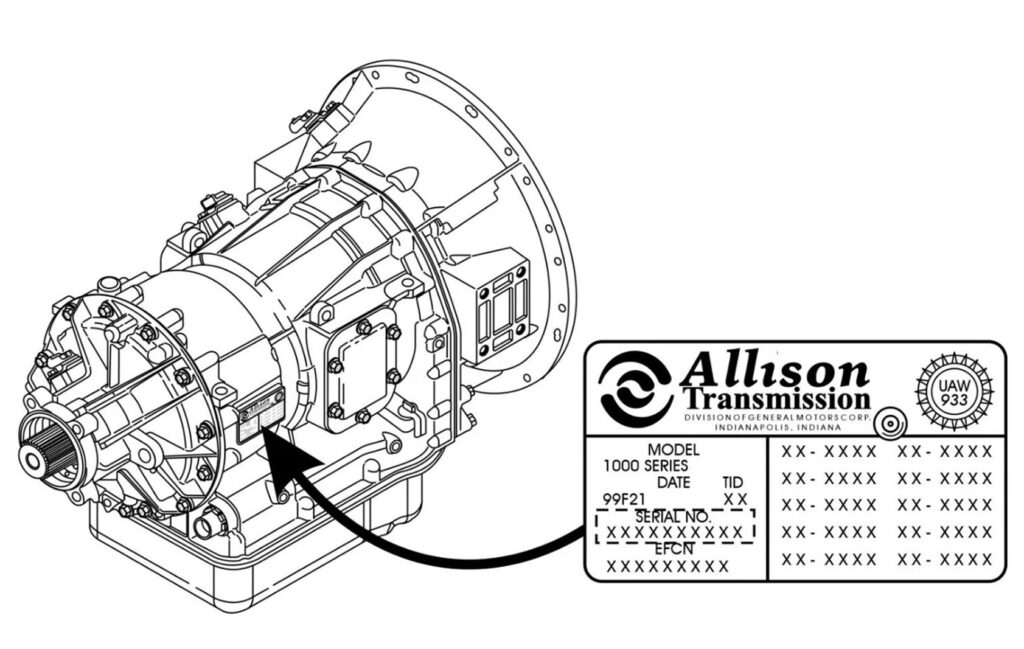
PTO has to be compatible with the main transmission. Some popular main transmission models are Allison, Aisin, Eaton-Fuller, Detroit, Volvo, ZF, Paccar.
Truck brands are the most common confusion for some end users. Truck brand is not important to select a compatible PTO. A Mack Truck can have Allison or Volvo main transmission. The most important data is the main transmission brand and code.
Main transmission codes for our PTOs are listed at the bottom of each product page. (e.g., ALS-10A Series) are available at the bottom of each PTO product page.”
Mounting Side
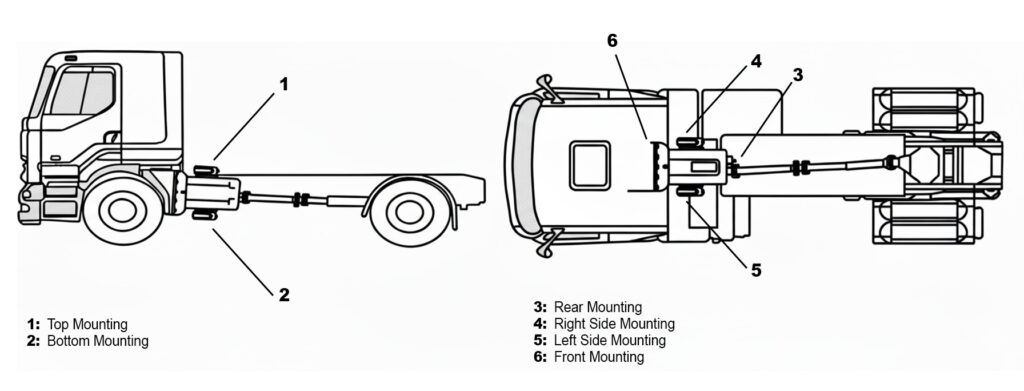
If more than one input is available, you must select the smaller overall size to mount the PTO easily. More than one input can be used at the same time, but the current power generated in the transmission must be evaluated. In case of different PTO applications, consider contacting our technical department.
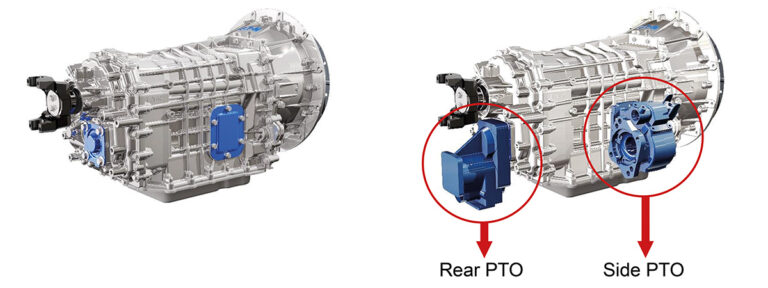
Illustration of Side and Rear Mounted PTOs
Defining PTO Output Flange
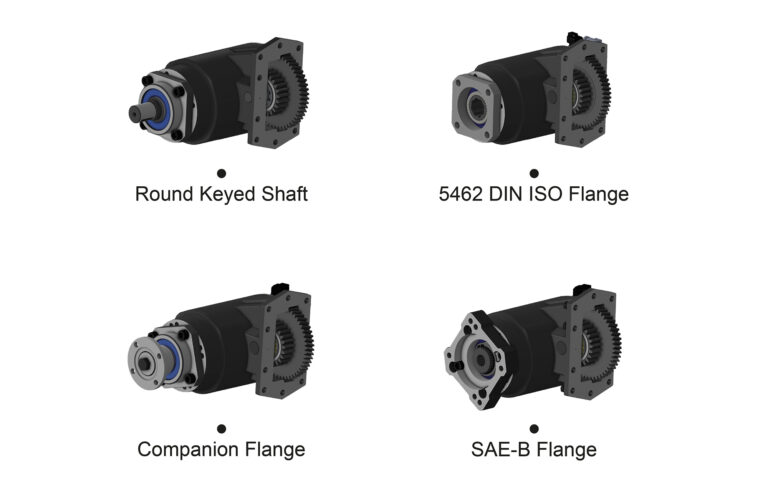
PTO Output Types
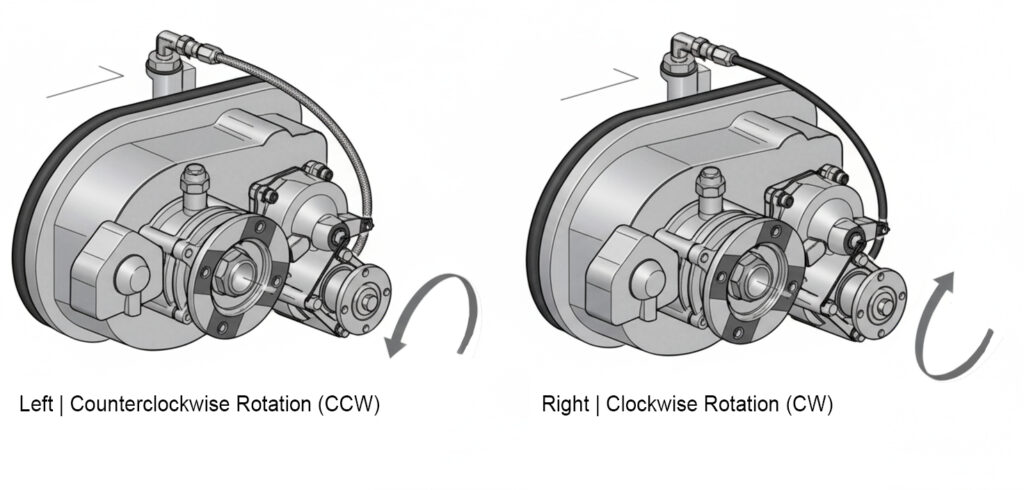
Rotation
Rotation is the key factor for the right choice of pumps or other mechanical devices in which the rotation direction must be uniform with the PTO.
Warning! The PTO rotation is defined when facing the PTO connection flange. As a result, the pump rotation will be the opposite.
Gear Position
This is one of the important details to check whether the Power Take-Off is correctly selected. The position of the gear must be compared to the center line of the PTO output and the motion vector of the vehicle. The position is defined from the front when facing the output.
Rotation Speed
All speeds shown in the catalogue are calculated by taking into account the rated motor speed of 1000 rpm. Some transmissions are driven by a number of speed levels selected by the gear shift lever. You can find the current speeds of each PTO in the relevant catalogue.
Output Torque & Power Calculation
The following formulas are used to calculate the power (kW) for the equipment to be attached:
Units:
Horsepower: HP (Power)
Kilowatt: kW (Power)
LB-FT: Pounds-Feet (Torque)
NM: Newton Meter (Torque)
Revolution Per Minute: RPM
Power:
HP = LB-FT × RPM / 5252
kW = T × RPM / 9550
Torque:
LB-FT = HP × 5252 / RPM
NM = kW × 9550 / RPM
Pump Input Power:
HP = (PSI × GPM) / 1714
kW = (Bar × LPM) / 600
Approximate Engine Rotation During Operation
The speed is stated as the percentage of PTO speed in relation to the engine speed. For instance, at a pump speed of 1000 rpm and engine speed of 1500 rpm, the PTO rotation would be approximately two-thirds, or 67%.
Formula:
Equipment Speed / Desired Engine Speed = PTO Speed (% of the engine)
Example:
1000 / 1500 = 0.666 (67%)
Intermittent Torque Requirement of Drive Components
The torque value at the output of the Power Take-Off depends on the structural parameters. During selection, the torque value must be taken into account when comparing the characteristics of the transmission system. Torque values can be calculated as Nm or LB-FT. The torque value indicated is the maximum available for each output.
Warning!
Always ensure that the torque absorbed in the transmission is less than the maximum permitted by the transmission itself.